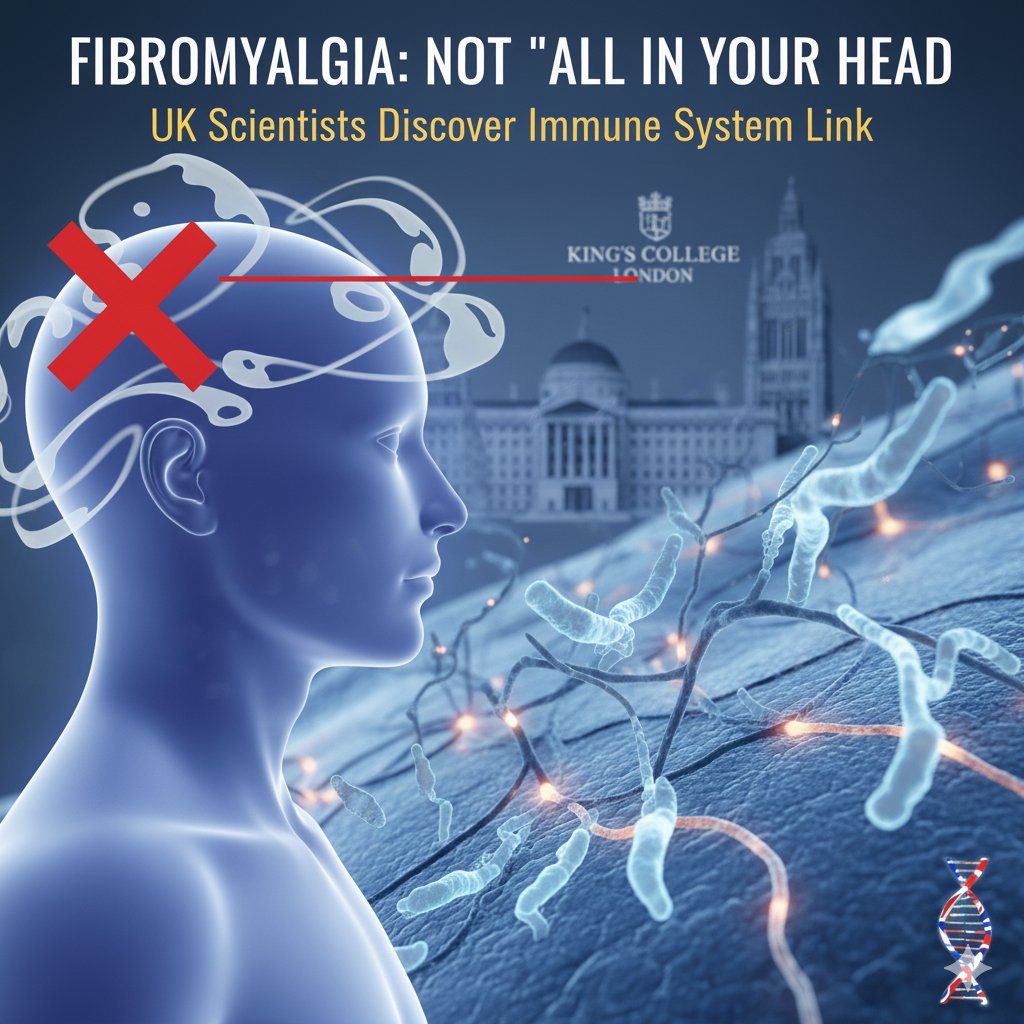
For decades, many people living with the chronic pain and debilitating fatigue of fibromyalgia have felt dismissed, often told their symptoms were psychosomatic or “all in their head.” Now, groundbreaking research from leading UK institutions, including King’s College London and the University of Liverpool, is providing definitive scientific validation. In a major step forward, scientists have found strong evidence that fibromyalgia may actually be a disease of the immune system, not just the brain. This discovery is a monumental moment for the fibromyalgia community, offering new hope that effective, targeted treatments—and perhaps even a cure—could finally be on the horizon.
The most significant recent finding challenges the long-held ambiguity surrounding fibromyalgia’s cause. Researchers have zeroed in on the role of the immune system:
• The Mechanism: A recent study has strongly suggested that specific antibodies produced by the immune system are the culprits. These antibodies appear to travel through the body and attach themselves to nerve cells in the skin.
• Altered Nerves: Once attached, these antibodies appear to alter the ‘firing’ of sensory nerves, known as mechanoreceptors. This process makes the nerves hypersensitive, causing them to respond intensely to stimuli that shouldn’t be painful—like light touch or cold temperatures.
• The Result: This mechanism provides a clear, physical explanation for the widespread pain, tenderness, and heightened sensitivity that are the hallmarks of fibromyalgia.
This finding is more than just academic; it has immediate, profound implications for patients:
1. Objective Validation: It offers scientific proof that the pain is real and has a biological, physical basis, directly challenging the narrative that has long led to patient dismissal and diagnosis delays.
2. New Diagnostic Tools: Identifying the role of these antibodies could pave the way for a simple, objective diagnostic blood test for fibromyalgia, replacing the current, often subjective, clinical process of ruling out other conditions.
3. Targeted Treatments: By establishing fibromyalgia as potentially immune-mediated, researchers can now focus on developing immune-targeted therapies aimed at neutralising the harmful antibodies, leading to more effective and mechanism-specific treatments.
Adding to the wave of optimistic news is another critical discovery from the University of Aberdeen and international collaborators. This team identified a new and distinct physiological pathway responsible for chronic pain, separate from the pathway that transmits acute pain.
• The Problem: Many standard painkillers are designed to treat acute pain pathways, which is why they often fail to alleviate the chronic pain experienced in conditions like fibromyalgia.
• The Solution: By isolating this separate chronic pain pathway, scientists now have a brand new, specific molecular target for drug development. This offers hope for a new class of painkillers designed specifically for chronic conditions that have been resistant to current medications.
After years of uncertainty, the latest research from the UK finally provides tangible, biological evidence that validates the experience of millions of sufferers. The combined discoveries of the immune link and the new chronic pain pathway promise a future where fibromyalgia is treated with greater understanding, better diagnostic tools, and treatments that target the root cause of the disease.
Please confirm you want to block this member.
You will no longer be able to:
Please note: This action will also remove this member from your connections and send a report to the site admin. Please allow a few minutes for this process to complete.